Treatment and research
Where to get specialist care? What treatment approaches are being developed today? Up-to-date information on clinical trials, promising approaches, and scientific advances.

Development of choroideremia gene therapy has started in Russia
The RetinaFond charity has signed an agreement with Sechenov University to develop gene therapy for choroideremia
Where to get specialist medical care in Russia?
Bochkov Research Centre for Medical Genetics
The leading scientific and clinical centre for ophthalmic genetics in the Russian Federation. It provides comprehensive diagnostics, molecular genetic testing, and long-term follow-up for patients with inherited retinal dystrophies, including choroideremia.
Address: 1 Moskvorechye St., Moscow
Phone: +7 (495) 111-03-03
Opening hours: Mon–Fri, 9:00–17:00
Clinical trials
To date, there is no officially approved drug in the world that can fully cure choroideremia. However, active clinical trials of new treatment methods are underway in different countries right now.
Important requirement: for potential participation in any clinical trial, a patient needs genetic test results with confirmed mutation in the CHM gene.
Please note: information about clinical trials on our website is provided for general awareness. The decision to participate in a trial should always be made together with your treating ophthalmologist and geneticist.
Where to find information about trials?
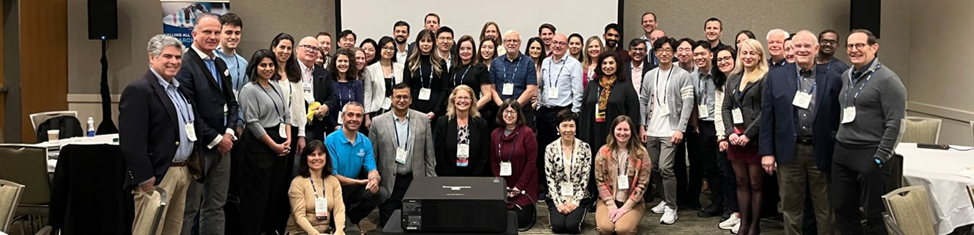
ICRN international network
A global alliance of scientists and clinicians working on choroideremia.
Promising treatment directions
Science is moving forward. Several approaches are being developed today that may help stop vision loss in the future or even restore it. Knowing your exact mutation is the key that may one day open access to personalised treatment.
1. Gene replacement therapy (closest to clinical use)
The method delivers a healthy copy of the defective gene to retinal cells. Healthy DNA is packaged in the shell of a special safe virus (a vector), which acts as the delivery vehicle.
The drug is administered surgically under the retina. Cells receive the “correct” instructions, begin producing the needed REP1 protein, and cell death is halted.
Early-phase studies have already shown encouraging results!
2. Gene editing (CRISPR-Cas9)
This is “genetic scissors” technology. Unlike gene therapy, where a new gene is added, CRISPR attempts to correct the patient’s damaged gene directly inside the cell.
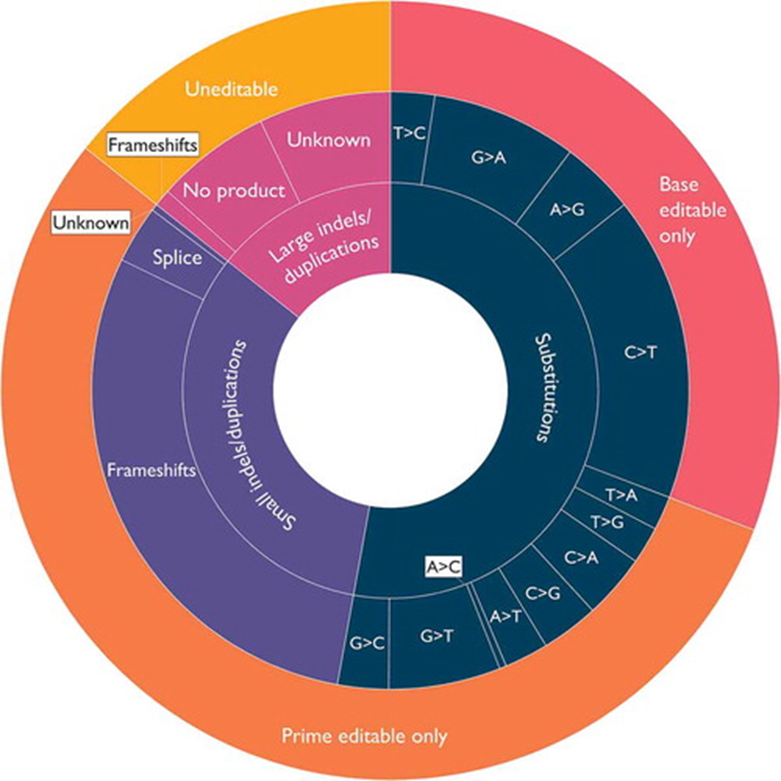
Potential genome editing targets in CHM
Barriers to wide adoption:
More than 300 different mutation variants have been identified in choroideremia. Creating individual “scissors” for each defect is still too time-consuming and expensive, which is why gene replacement (point 1) is advancing faster today.
3. RNA therapy
RNA is a messenger molecule that carries information from DNA to the protein production machinery. RNA therapy attempts to correct the error at the stage of transmitting this message.
Advantages of the method:
Such drugs are smaller and easier to deliver into the eye (with a standard intravitreal injection rather than complex surgery), but their effect is temporary, so injections would need to be repeated regularly.
4. Stem cell therapy
Gene therapy can save cells that are still alive, but it cannot restore those already lost. Stem cell therapy may help here.
Scientists are learning to take ordinary patient cells (for example, from skin or blood), “reprogram” them back into a stem cell state, and then grow new healthy photoreceptors for transplantation into the retina.
5. Optogenetics and the “bionic eye”
These technologies are being developed for patients at late stages, when light-sensitive cells (photoreceptors) have already been completely lost.
- Optogenetics: using genetic engineering, scientists make remaining cells that are normally not light-sensitive begin to respond to light.
- Visual prostheses: a special microchip is implanted in the eye. The patient wears glasses with a camera; the camera sends the image to the chip, which sends electrical signals directly to the brain.
6. Supportive therapy (neuroprotection)
At the same time, scientists are looking for ways to simply slow down cell destruction. This includes development of powerful antioxidants, ways to improve energy metabolism in eye cells, and methods of microcurrent retinal stimulation.
There are real reasons for optimism
Over the past decade, science has made significant progress in understanding choroideremia. What seemed like science fiction yesterday is being tested in real patients today. Gene therapy is already in phase II and III clinical trials, gradually moving closer to routine medical practice.
Join the community