I have just been diagnosed with CHM
We understand how difficult it can be to receive this diagnosis. Here you will find a clear action plan, reliable medical information about the disease, and support from a community of people with similar experience.
What should I do after diagnosis?
Patient booklet on choroideremia
From first symptoms to understanding, support, and action
Get comprehensive information about the disease
Learn about symptoms, disease progression, treatment options, and available support. Understanding your condition helps you adapt to changes and make informed decisions.
Confirm the diagnosis with molecular genetic testing
Molecular genetic testing can identify a mutation in the CHM gene and confirm the diagnosis. For Russian citizens, free genetic testing is available after an in-person consultation at the Bochkov Research Centre for Medical Genetics — the first and only ophthalmic genetics department in Russia.
Join the choroideremia patient community
The Russian CHM patient community is part of the international Choroideremia Research Foundation (CRF) network. Here people support each other, share experience, and work together to bring therapies closer.
In the community, you can:
- support each other and share lived experience
- help spread knowledge about choroideremia among doctors and patients
- take part in international projects and research
- support therapy development and improved medical care for people with CHM
Have regular check-ups and protect your vision
Regular follow-up with an ophthalmologist helps monitor the retina and maintain eye health in good time.
Recommendations:
- Protect your eyes from bright light (wear sunglasses)
- Do not smoke — smoking accelerates retinal damage
- Maintain overall health and a healthy lifestyle
- Attend regular ophthalmic examinations
Remember — you are not alone
Early diagnosis, reliable information, and community support help preserve quality of life and hope for treatment. The choroideremia patient community is always ready to support you on this journey.
What is choroideremia?
Choroideremia (CHM) is a rare inherited retinal disease that causes progressive vision loss. It is caused by a mutation in the CHM gene on the X chromosome.
In choroideremia, there is gradual degeneration of key structures at the back of the eye: the choroid, the retinal pigment epithelium, and the photoreceptors.
The first symptoms usually appear in childhood as night blindness (nyctalopia) — difficulty orienting in dim light or darkness. Over time, progressive narrowing of peripheral visual fields leads to “tunnel vision,” where only a small area of central vision remains.
Key facts:
- ✓ Estimated prevalence is approximately 1 in 50,000 people
- ✓ X-linked recessive inheritance — the disease predominantly affects males
- ✓ Female carriers usually have no vision problems, although in rare cases varying degrees of impairment may occur
- ✓ International clinical trials of CHM gene therapy are actively underway
More about genetics and disease mechanism
The CHM gene is located on the X chromosome. Its main role is to produce the transport protein REP1.
This protein works in cells like a “courier.” It helps deliver important molecules to the right parts of retinal cells. If a genetic defect means REP1 is not produced or does not work properly, intracellular transport is disrupted. Cells stop receiving adequate nutrition, metabolic waste builds up, and over time they thin out and die.
Why is only vision affected?
Nature provides a “backup” protein — REP2. It can successfully take over the functions of damaged REP1 in almost all organs of the body. That is why choroideremia does not affect general health. However, retinal cells need large amounts of the original REP1, and the backup protein is not enough for them. As a result, the disease manifests only as vision loss.
How does the disease progress?
Choroideremia develops slowly, over several decades. Below is the most typical course of the disease.
It is important to understand: the rate of symptom progression and the degree of vision loss are strictly individual. They can vary significantly even among members of the same family with the exact same mutation.
Birth — Early Childhood

In childhood, vision usually does not differ from normal. The first changes can only be noticed by a doctor when examining the fundus.
Childhood and early adolescence

Night blindness appears: it becomes harder to navigate at dusk and get used to the dark after bright light.
Young adulthood

Peripheral vision gradually narrows. The center remains clear, but objects on the sides begin to fall out of the field of view.
Adulthood
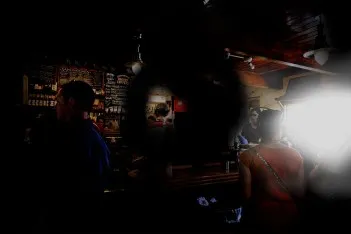
"Tunnel vision" becomes more noticeable. It is harder to navigate and move confidently in crowds and unfamiliar places.
Middle age
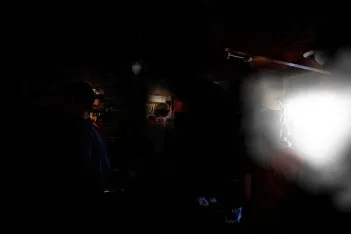
Some patients experience changes in color perception and depth perception: it becomes harder to judge distance to objects.
Older age
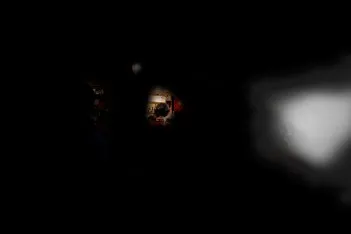
Changes can affect the macula. It becomes harder to read and recognize faces, making vision rehabilitation especially important.
Autoplay every 6 sec
Important to remember:
The rate of disease progression is unique to each patient. For some, vision remains quite useful up to 40–50 years of age and even longer, while for others changes happen faster. The main thing is that science is not standing still today. Active development of gene therapy methods and clinical trials open up real prospects to slow down or completely stop the progression of the disease in the future.
Image source: curechm.org
Where to get genetic testing?
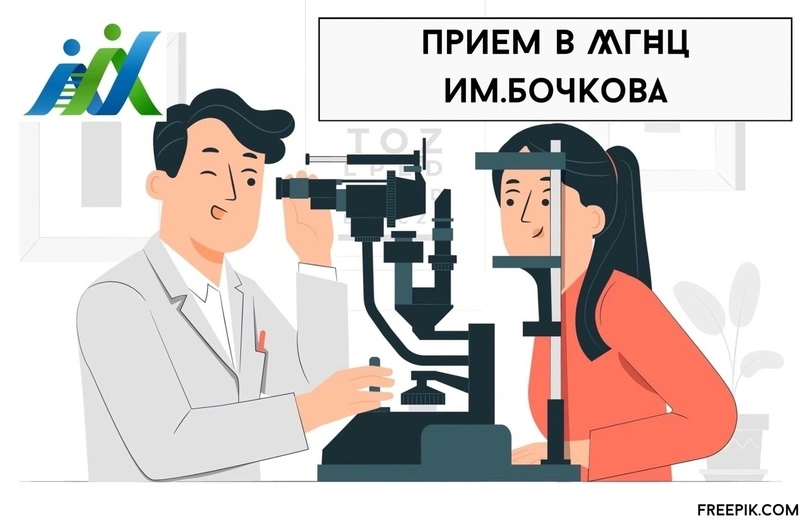
Bochkov Research Centre for Medical Genetics
The Bochkov Research Centre for Medical Genetics (Federal State Budgetary Institution “MGNC”) is the first and only ophthalmic genetics department in Russia. Russian citizens can receive free genetic diagnostics for inherited eye diseases, including choroideremia, after an in-person consultation.
An ophthalmic geneticist consultation includes:
- Establishing a clinical and genetic diagnosis
- Assessing risk for relatives
- Determining patient management strategy
- Ophthalmic examination (fundoscopy, OCT, ERG)
- Molecular genetic testing (identification of pathogenic changes in the CHM gene)
Head of the ophthalmic genetics department: Vitaly Viktorovich Kadyshov — MD, PhD, Associate Professor, geneticist, ophthalmologist of the highest qualification category, Chief Freelance Specialist in Ophthalmic Genetics at the Russian Ministry of Health.
Consultations are provided by ophthalmic geneticists O.A. Khalanskaya and S.I. Kuznetsova under the direct supervision of the department head. All clinical data and test results are reviewed personally by V.V. Kadyshov.
Photo: Look to See!
Next steps
Read practical guidance for living with choroideremia, learn about current treatment approaches, and join the community.